
How lucky was I, to have a grandfather who helped me nurse injured birds back to health, who taught me that earthworms are superheroes and that the best tomatoes that I will ever taste will be the ones I grew myself? I think of this every time I develop lesson plans and activities that will help my students learn, like I have, that we are connected to nature. It’s a part of us, and we must tend to and protect nature as we would our own selves.
Children who are taught to care will be adults who care and at the moment we need leaders who passionately care for the world in which we live. Children spend far longer indoors than ever before, depriving them of the opportunities to develop the patience and observational skills it takes to spot a starling, identify a hellebore and curiously examine the teeming metropolis under a rotting log.
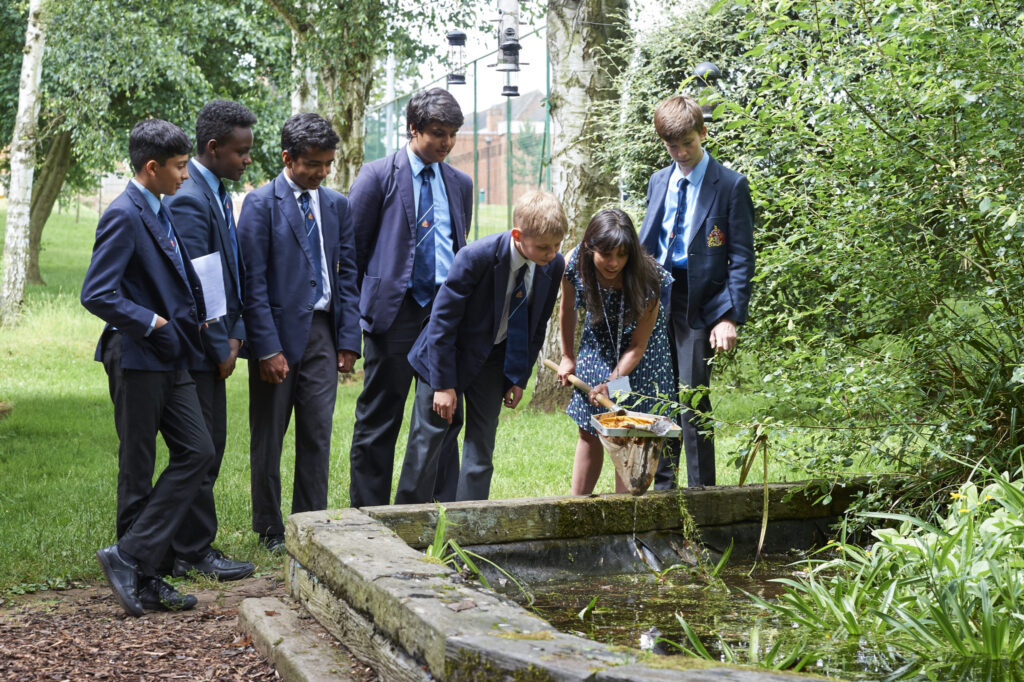
Our wildlife pond is teeming with creatures that thrill and excite students, heightening their imagination and enthusiasm and unlocking their creative and observational sides. The lessons our Year 8 students get to experience with their pond samples makes them more engaged with the curriculum, enthusiastic about food webs and brimming with excitement at the sight of a newt. These are the lessons they remember, as they nostalgically look back on their seven years at school before heading off to university. These are also the experiences that help them make connections with the theory in a biology lesson and the reality of the world around them; connections that are vital to strengthening their understanding.
Older pupils benefit from environmental education as well when they learn that everything is connected to everything else – biologically, socially and in a myriad of other ways. Students also learn how their own decisions can influence the world around them, and their connections to nature help foster a feeling of tolerance and understanding in all aspects of school life. The knowledge that they need in order to take responsible action can be taught, so they feel empowered to be leaders and make changes for a more sustainable future.
Planning allotments with students in Shells is an exciting part of the summer term where students design their own mini allotments, plan what to grow and discover what it takes to have a bountiful harvest. This year we have taken this plan online with the launch of the horticultural society. Zoom lessons on plant growth and care are an exciting end to a busy school day and I learn as much from the boys’ varied interests as they do from mine.